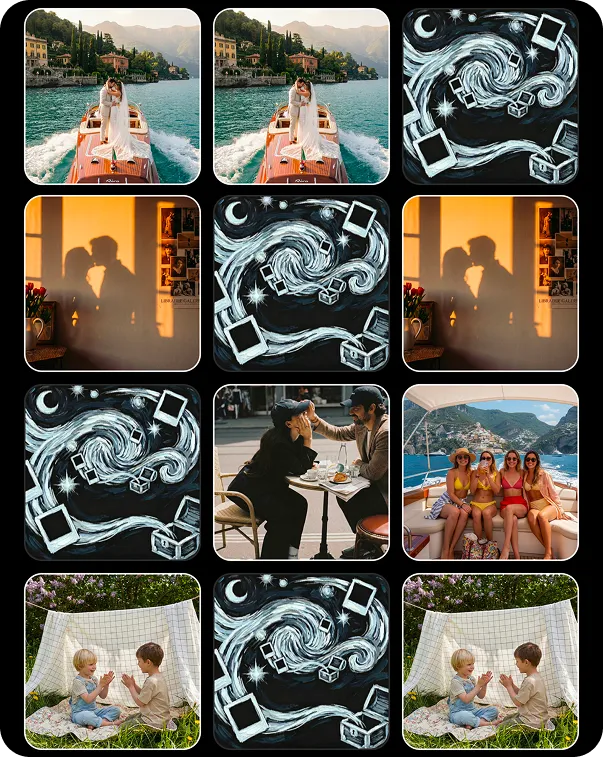
A photograph can be a starting point for spending time together. It does not need to lead to a correct name, a remembered date or a finished game. When sharing pictures with someone living with dementia, comfort and choice matter more than the rules.
This is a practical leisure suggestion, not medical advice. A photo matching activity is not a treatment, and we do not claim that it prevents dementia or improves its symptoms. Ask a relevant care professional for guidance about individual care needs.
Ask what feels comfortable
If possible, involve the person in choosing the pictures. A relative or carer who knows them well may help identify images they enjoy and pictures that could be distressing. Do not assume that every old photograph will be welcome.
Start with clear images showing one main subject. A familiar pet, a favourite garden or a household object may be easier to approach than a large group portrait. The person does not have to recognise every subject for the time to feel worthwhile.
Prepare a quiet, uncluttered table
Choose a comfortable place with enough light to see the pictures and avoid glare. Remove unrelated items from the playing area. Have only a few cards ready rather than spreading out the whole deck.
You might try:
- Two matching pairs, all face up.
- One photograph at a time, with no matching at all.
- Choosing a picture to look at together.
- A brief conversation followed by a different activity.
There is no requirement to progress to a bigger set. Fewer cards may remain the right choice.
Make comments rather than asking test questions
“That looks like a sunny day” leaves more room than “Do you remember who this is?” Offer a simple observation and give time for a response. Silence is fine too.
Do not correct a name or insist on a particular story. If an image causes sadness or confusion, put it aside without argument. Avoid treating the session as a measure of what someone can or cannot remember.
Follow their lead, including when to stop
Watch for tiredness, frustration, discomfort or a wish to do something else. Offer a break or finish. A few calm minutes are enough; the activity does not need to produce a result.
Agree with family or carers about which photographs are appropriate to share and who should keep the set. Respect privacy even when a picture seems harmless to you.
Read our photo activity ideas or see how a personal deck is made.